-
By Anil Trivedi
- June 12, 2026
- 0 Comments
- Tire Industry, Uncategorized
If you’ve been scrolling through social media recently, you might have noticed a wave of celebration and a healthy dose of confusion rippling through the Indian automotive and corporate sectors. RPG Group Chairman Harsh Goenka has been actively highlighting a monumental milestone: Indian tyre manufacturers have officially stormed the global elite.
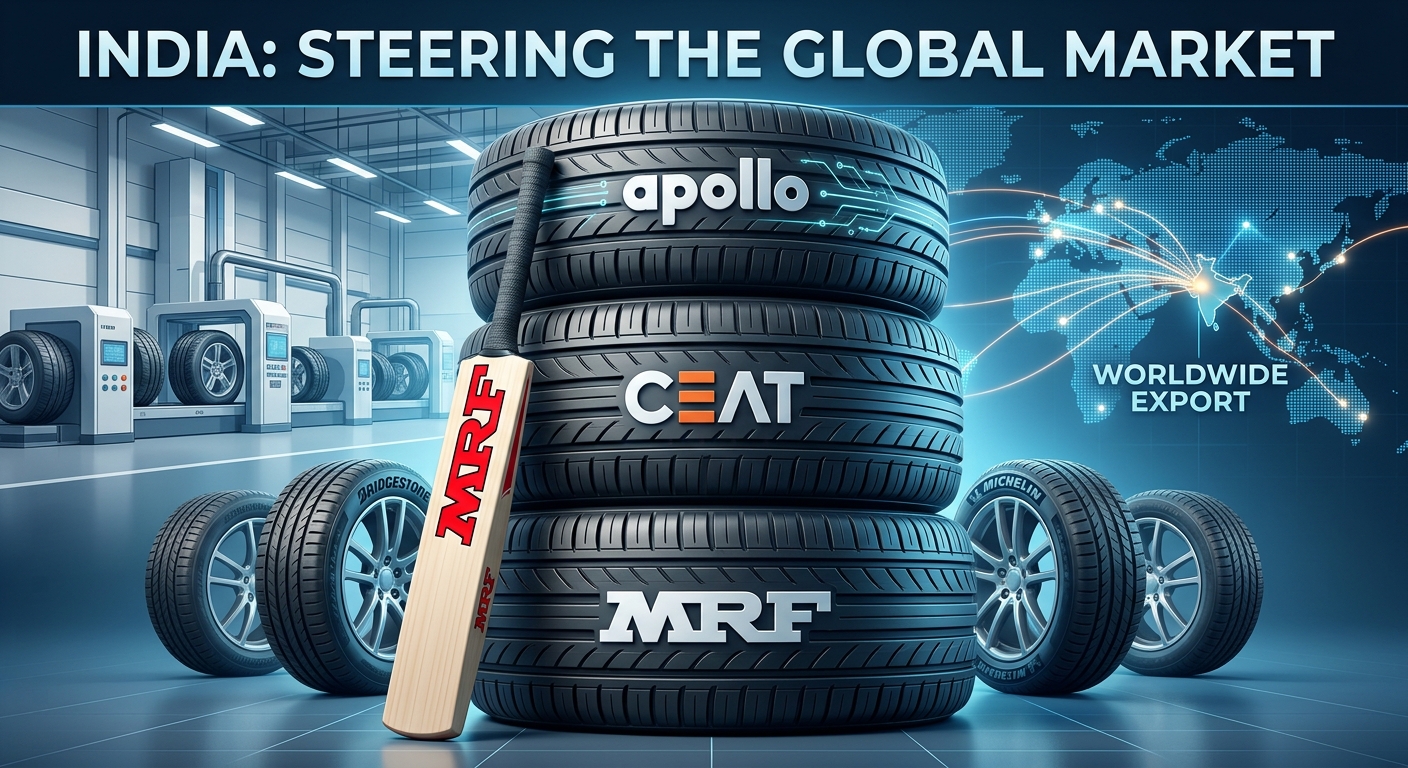
According to the freshly released Brand Finance Tyres 25 2026 report, three Indian corporate giants MRF (#3), CEAT (#4), and Apollo Tyres (#6) have claimed positions in the top 10 Strongest Tyre Brands in the world.
For many industry observers, the initial reaction was pure shock. How is CEAT ranking ahead of multi-billion-dollar legacy heavyweights like Bridgestone, Continental,Michelin and Pirelli? And where are industry powerhouses like JK Tyre or BKT?
To understand this historic shift, we have to look past total sales revenue and dive into how modern global brand equity is calculated.
The Metric Confusion: Brand Value vs. Brand Strength
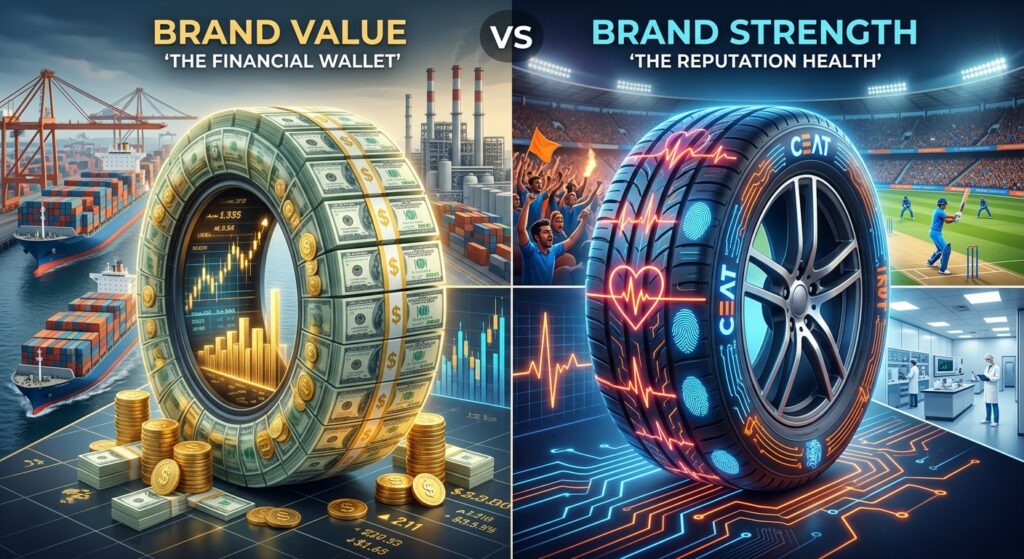
The skepticism surrounding the 2026 list comes down to a very common mix-up: mistaking Brand Value for Brand Strength. Brand Finance evaluates corporate brands using two distinct lenses:
Brand Value (The Financial Wallet): This is the estimated dollar value of the brand asset if it were licensed or sold. It is inextricably tied to total global revenue, massive manufacturing scale, and raw sales volume. On this front, the traditional hierarchy holds true: Michelin leads at USD 10.3 billion, followed closely by Bridgestone at USD 8.8 billion and Continental at USD 3.9 billion.
Brand Strength (The Reputation Health): This is determined by the Brand Strength Index (BSI), a balanced scorecard marked out of 100. It measures marketing investment, stakeholder equity (consumer trust, loyalty, and emotional preference), and future business readiness relative to the company’s operating scale.
This is exactly how CEAT edged ahead of Bridgestone on the BSI scorecard (84.9 vs. 80.7). While Bridgestone operates at a financial scale that dwarfs the Indian domestic market, CEAT and its Indian peers are generating superior marketing momentum, high consumer loyalty, and aggressive brand health relative to their size.
Why Indian Brands Swept the 2026 Scorecard
Indian tyre makers are no longer just domestic suppliers focusing on low-cost alternatives. They are scoring remarkably high on Brand Finance’s metrics due to three major strategic pillars:
Deep Emotional Equity and Local Trust
In India, tyres are an active purchase decision. Consumers seek hyper-specific engineering traits—puncture resistance, heavy load endurance, and structural durability tailored to demanding road conditions. By conquering this massive consumer base, brands like MRF and CEAT have locked down incredibly high consumer sentiment and recall metrics.
High-Profile Marketing Rebranding
Indian brands have aggressively decoupled themselves from the traditional “utility product” image. High-visibility campaigns, massive cricket sponsorships, and focused premiumization targeting luxury SUVs and performance two-wheelers have dramatically elevated their awareness scores.
High-Margin Global Moves & “The Cricket Effect”
The BSI heavily rewards forward-looking corporate strategy and massive marketing investments. The 2026 report specifically highlighted the bold structural moves propelling these companies forward:
CEAT finalized a transformative USD 225 million acquisition of Michelin’s Camso brand, instantly giving them global ownership of a premium off-highway construction and agricultural tyre business, alongside two state-of-the-art manufacturing facilities in Sri Lanka.
Apollo Tyres was recognized as the biggest brand strength improver in the top 25, skyrocketed from 13th last year to 6th in 2026. This monumental surge was fueled by an absolute blockbuster marketing play: Apollo Tyres stepped up as the official Lead Jersey Sponsor of the Indian National Cricket Team in a massive ₹579 crore ($65.7 million) multi-year deal with the BCCI. By placing their logo on the front of the Men’s, Women’s, and Junior Team India jerseys across all formats, Apollo fundamentally locked down unparalleled national visibility and deep emotional equity. Coupled with their aggressive activation of the premium Vredestein brand to capture high-end European replacement markets, Apollo completely transformed its global familiarity score.